About Mikael Avatar
Born clinically dead.
Chose to burn bright.
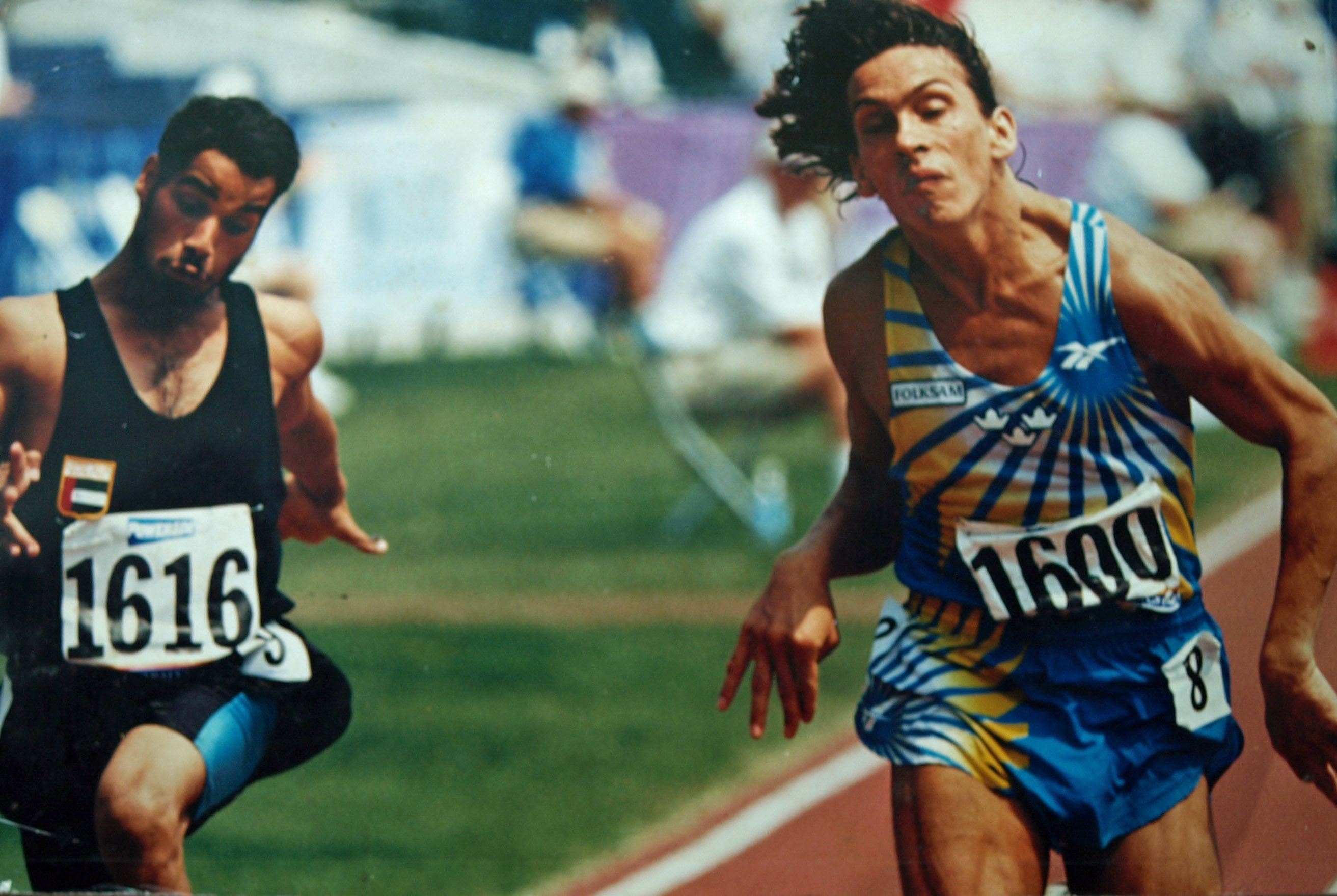
Born clinically dead for 45 minutes · Paralympic world record holder · Pain-free in Thailand since 2009
Most people who meet me for the first time think: "Poor guy with CP."
After 15 minutes they think: "He's sharper than I expected."
After 45 minutes — they have completely forgotten I have cerebral palsy.
Something else happens instead. Their perspective shifts. And they leave with something they cannot put back.
That is the magic. And it happens every single time.
Two moments that stayed in the room
What happens when
Avatar enters.
Caux, Switzerland
At the Initiatives of Change Foundation — the same stage where Kofi Annan spoke the year after — Mikael held a talk. When he finished, the host did not call for the usual moment of silence.
She called for five minutes of silence. No panel discussion followed. There was nothing more to say. In the audience that day was Bill Porter — the British publisher who founded the International Communications Forum and created the Sarajevo Commitment, signed by thousands of journalists worldwide as a pledge to tell the truth.
Save the Children — the cabbage head
At Save the Children's annual conference on children with disabilities — the Swedish Social Minister in the audience — he walks on stage with a paper bag. Silence. He slowly pulls out a bucket — lets it drop from the stage. The front row flinches. Then he unwraps foil that rustles through the quiet hall. More rustling. The front row laughs nervously.
Silence again. He holds a cabbage head — 2.5 kg — and says quietly:
"I wonder how parents do it — in some parts of the world, when they leave a child like me in the forest to die. Do they wrap them in their best towel? Or do they do it like this?"
He drops the cabbage into the bucket. The sound fills the hall. Dead silence — deeper than before. He picks up the bucket, carries it to the side of the stage, sets it down. Walks back quickly and says: "Sorry — you probably want the lighter version." And he begins the real story.
A year later, the children at that conference — who could have chosen any pop star — chose Mikael Avatar as their artist. Because every time they walk past a cabbage in a grocery store, they remember.
What I do today
I work with leaders, entrepreneurs and high-performers who have built successful lives on the outside but feel something is missing on the inside.
Through The Mikael Avatar Method I help people drop the performance mask and reconnect with who they actually are — one honest 1% shift at a time. No templates. No fluff.
People have paid me just to drive them to the airport so they could sit in the car with me. I don't know why this happens. I only know that when people sit down with me, something often shifts.
What happens in the meeting
A meeting with
Mikael Avatar.
Not coaching. Not therapy. Not a lecture.
A 45–90 minute conversation where the perspective you have carried for years quietly shifts — and you leave with something you cannot put back.
"Mikael Avatar repeatedly surprised me and opened my eyes. Yeah? Can you think like that? An ordinary situation in everyday life became something completely different. Why am I doing this? Why did I fool myself into thinking this?"
Executive Business Coach
"When I started my coaching with Mikael Avatar, I thought a bit that he is CP injured. But that picture sat for a maximum of 30 minutes. He is a vibrant, creative and magical person to meet — and a super system buster."
Johannes — Teacher, Primary School
"It was harder than I thought to change. To my sadness and surprise, I realized that the roadblocks were in my mind. And to my delight — I realized that I was the one that could change things."
Patrick — Entrepreneur
"As a military, I say – you get 100% dividend. He is arguably the best coach I have ever had. He coaches me based on full truth. Dare to say what I do not want to or dare to hear — with complete respect for me."
Leopold — Master Sergeant, 30 years Swedish Armed Forces
"The tools I now have give me the confidence to always be able to go wherever I want. I see completely different road choices. As a chess player, I see consequences of possible future decisions."
George — Coordinator of large productions, theater and opera globally
"Fantastic answers! You get 100% — the first person I’ve ever given 100."
Jim Beach — Host, School for Startups Radio (SBA Award Winner)
"Mikael is a master at bringing people to a whole new level."
Bo Carlsson — Former CEO, Scandic Nordic & Hilton
"I will never forget you. I listened to you in Stockholm many years ago. You made a fantastic entrance! It was 2009. We needed to hear you — we were working as job coaches. You pretended you had come to the wrong place. It was wonderful!"
leonardsdotter — Stockholm
"I will never forget the course with you and Barbro. You taught me to see what I truly desire — because then it becomes real fast. Three days later I had found my apartment by the water with a terrace. Everything I had wished for, all at once."
Kerstin Nilsson
A Real Conversation with Mikael Avatar
This is not coaching. Not a lecture. Not a method.
It is one honest, open conversation between two human beings. No agenda. No filters. Limited to a small number of people each month.
People have paid me just to drive them to the airport so they could sit in the car with me. I don't know why this happens. I only know that when people sit down with me, something often shifts.